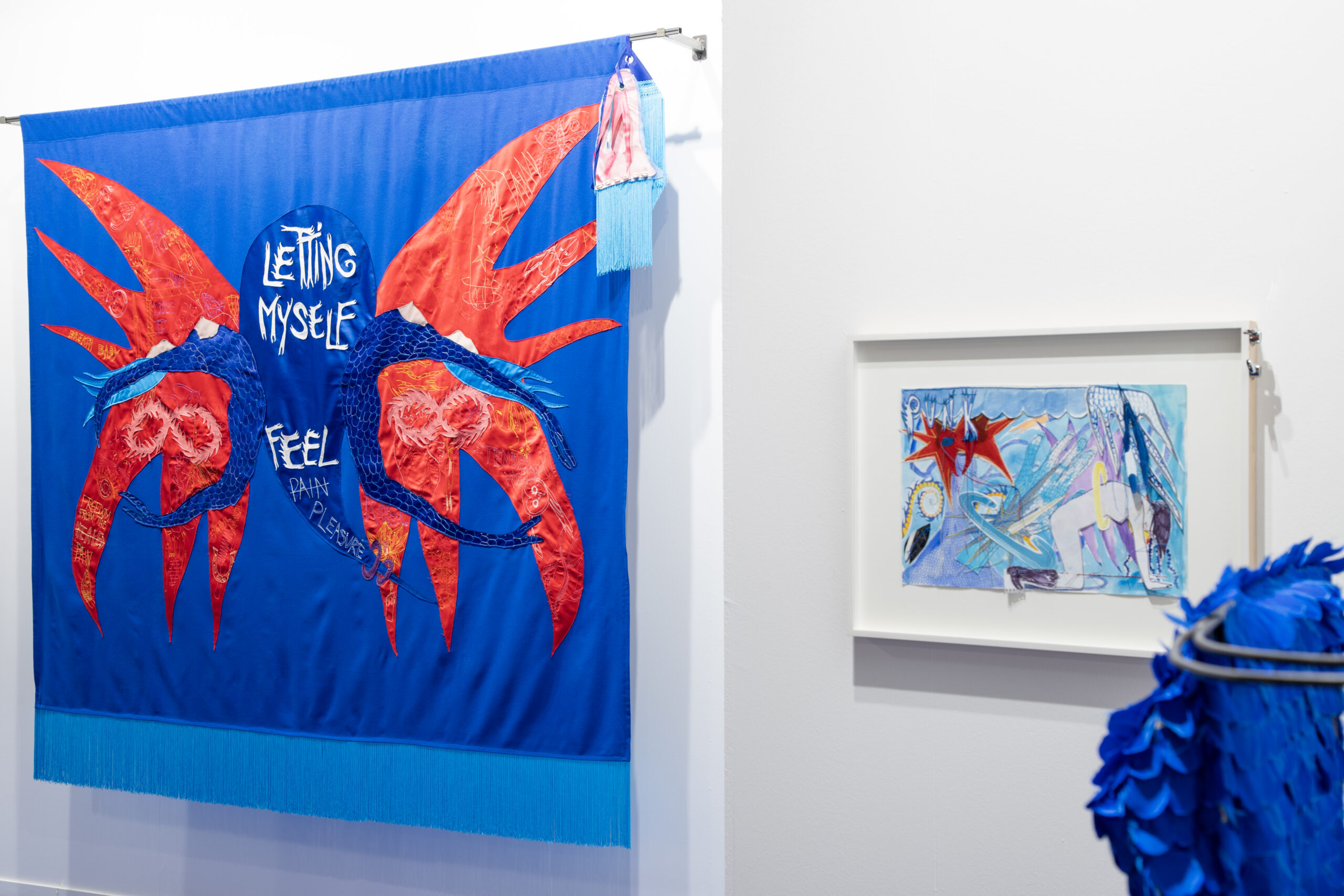
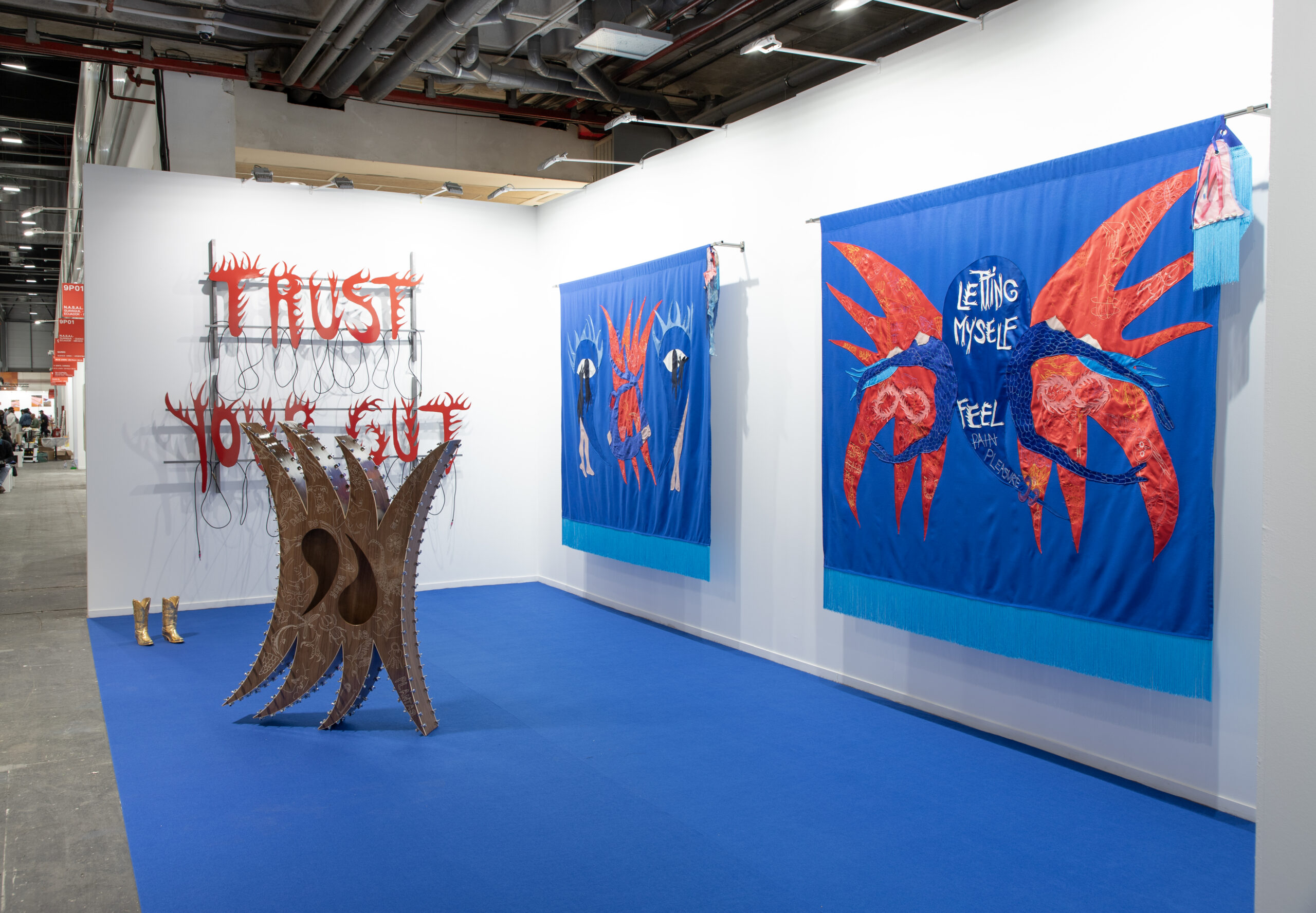
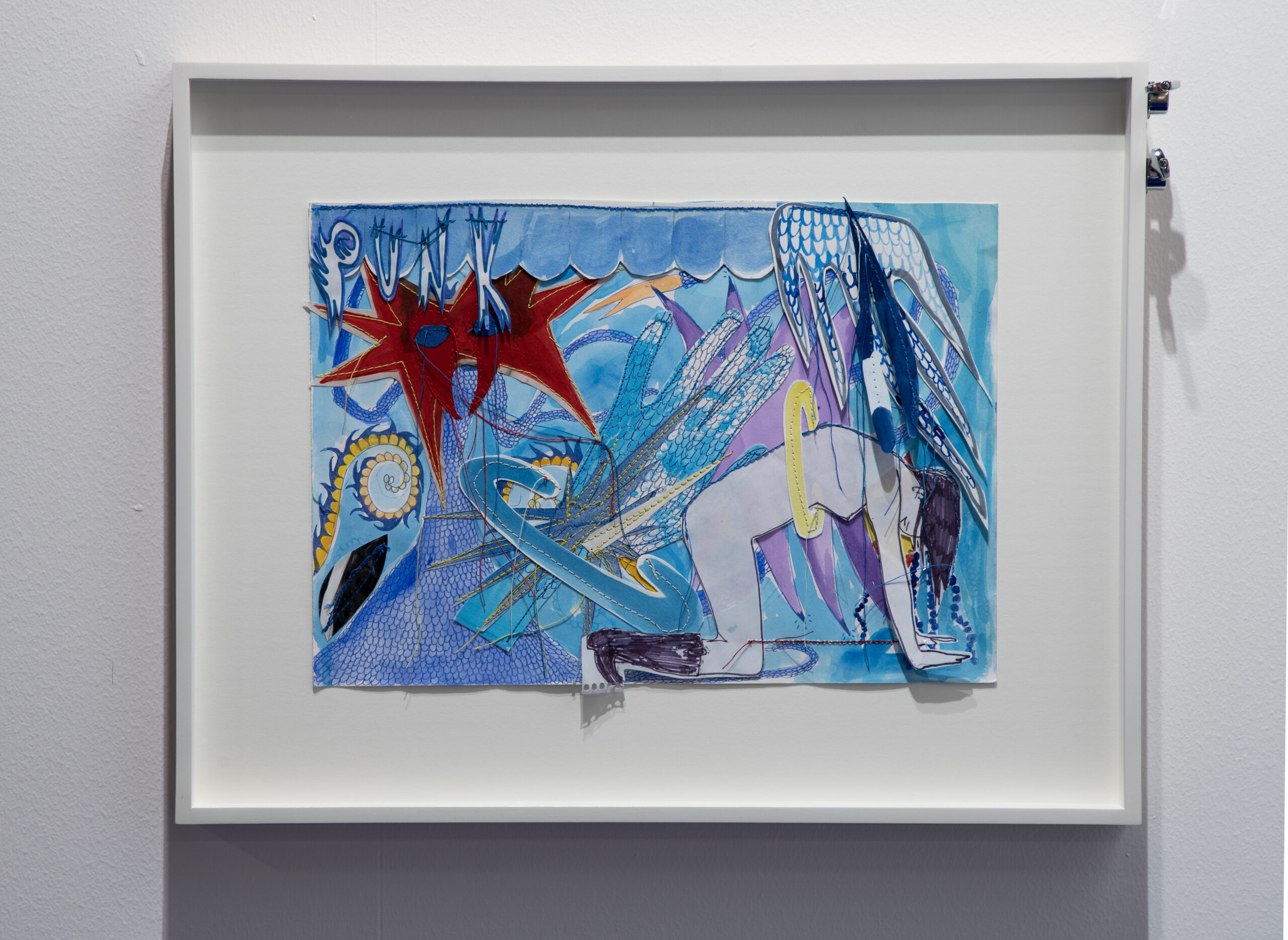
Letting myself feel
Letting myself feel Read More »
04.03.2026 – 08.05.2026
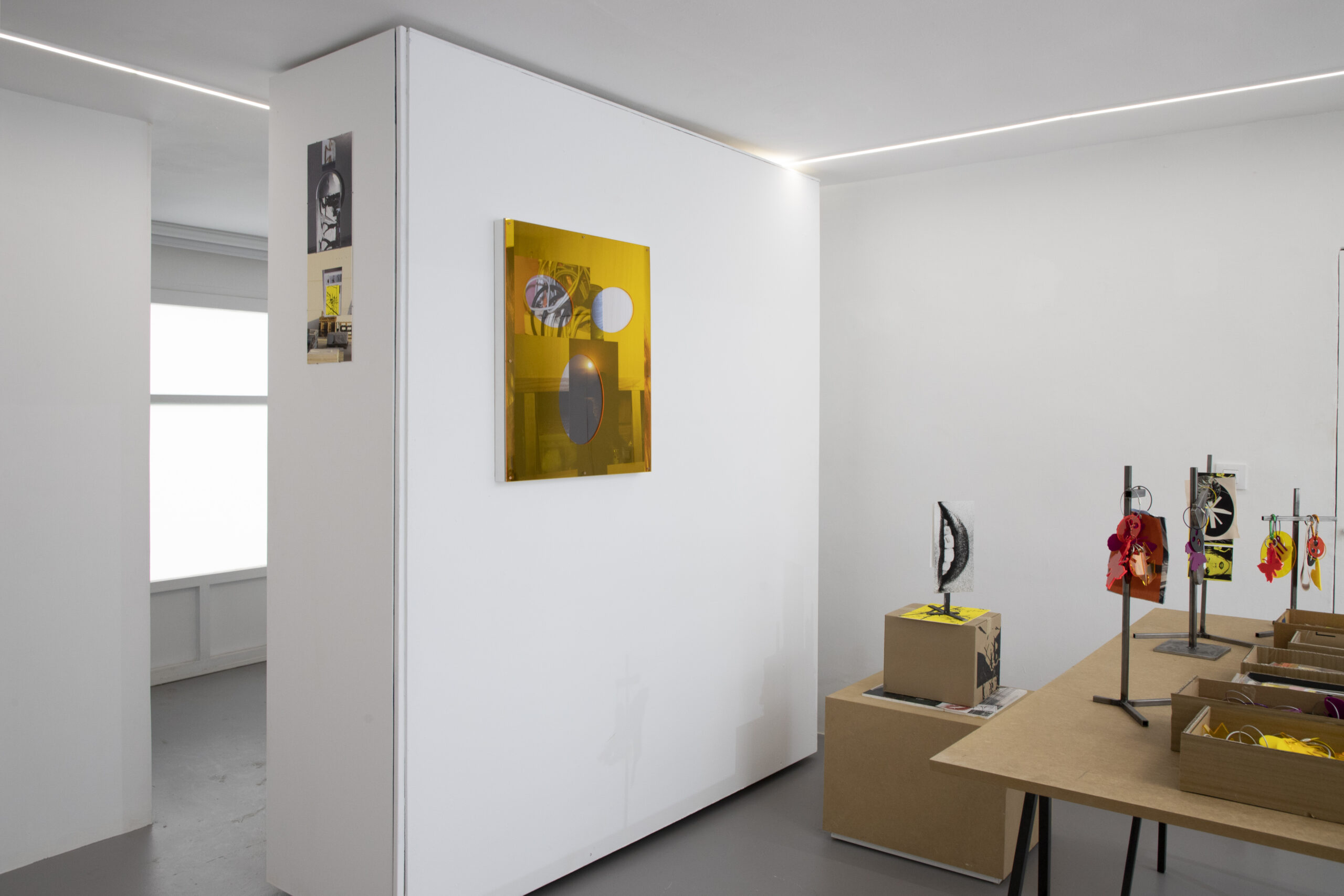
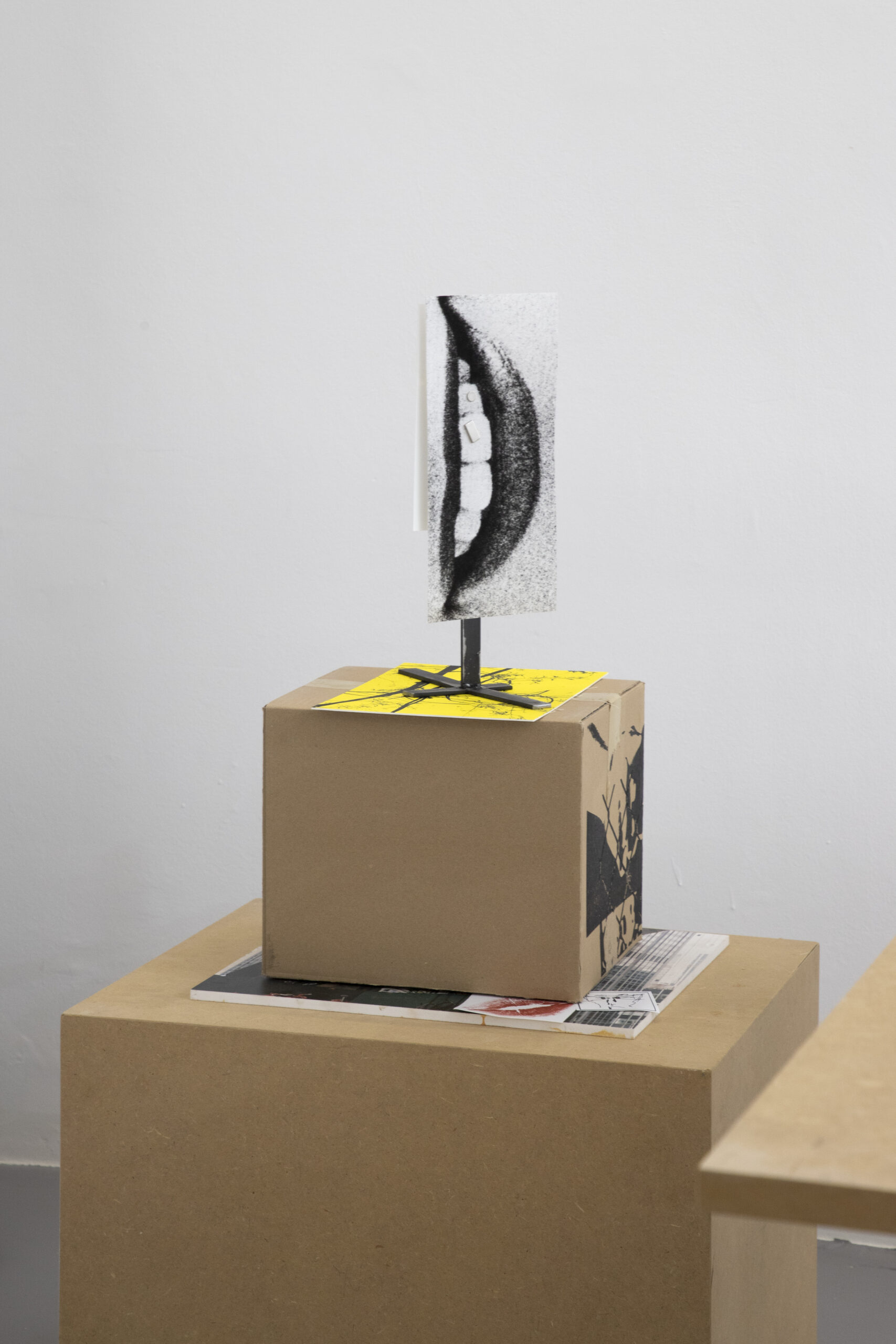
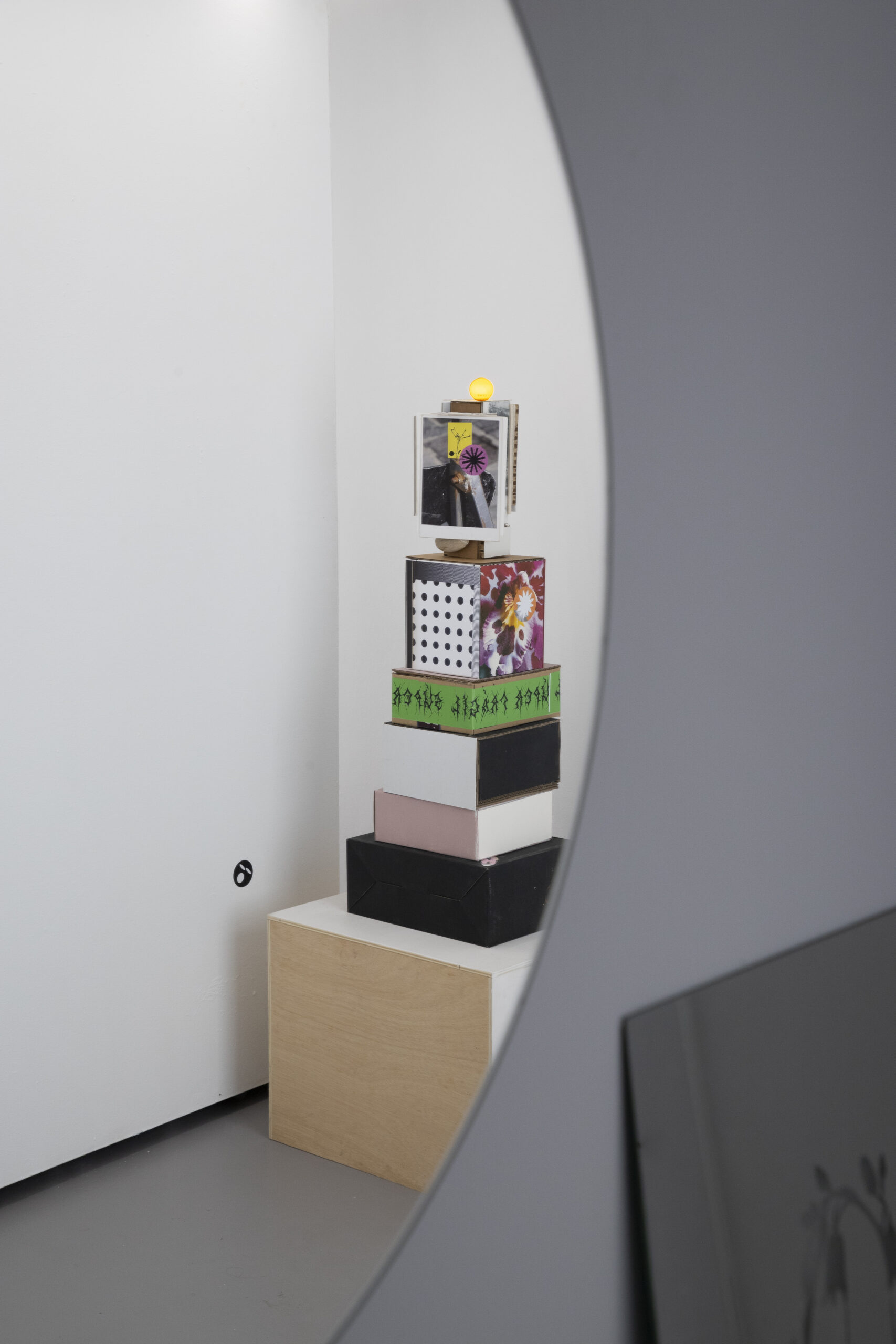
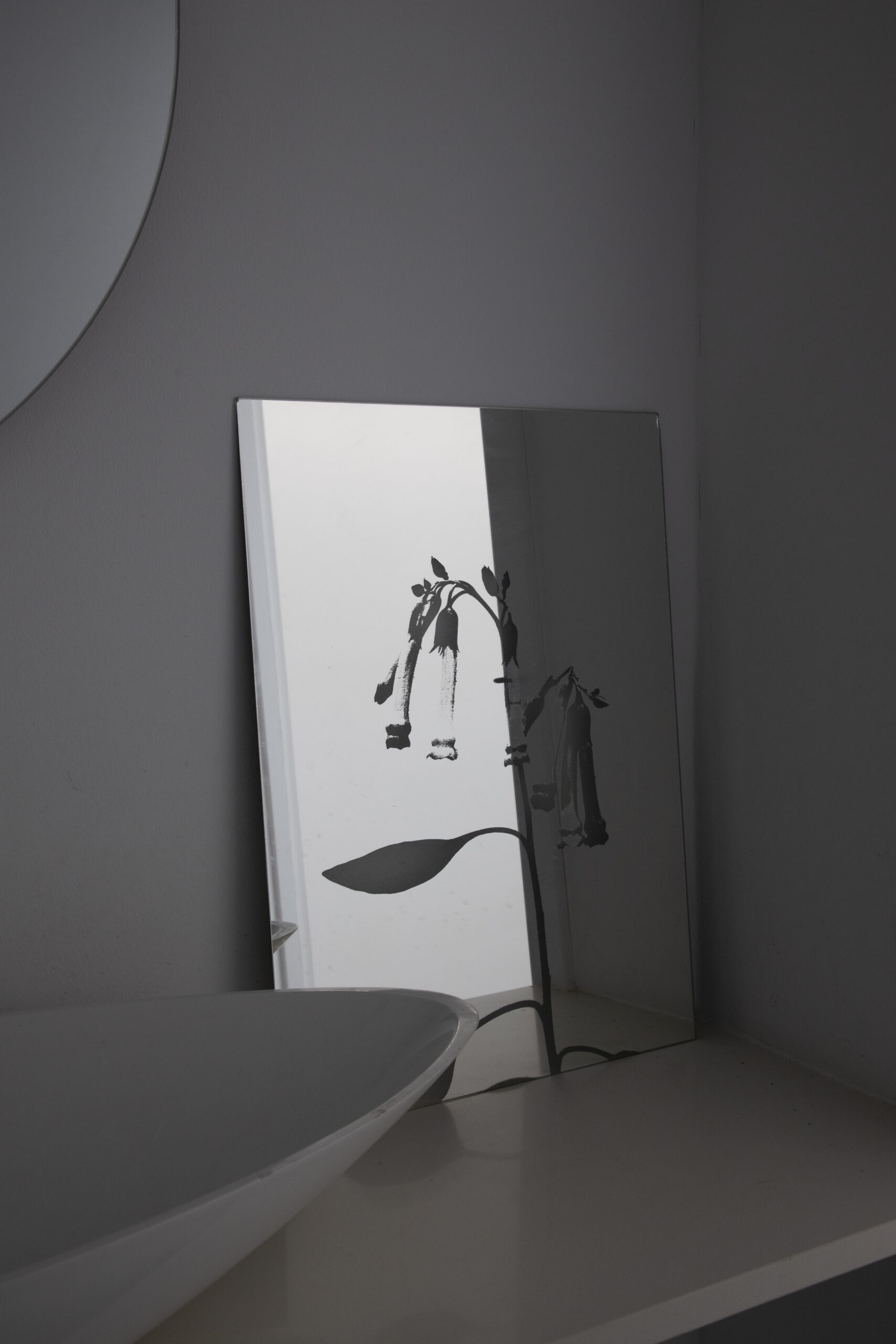
Gema Polanco (Valencia) is a visual artist. Her work, primarily installation-based, also incorporates textiles, drawing, music, and photography. She questions the traditional feminine roles that confine and categorize women, constantly seeking new spaces, alter egos, that allow us to be who we want to be. She appropriates and aligns herself with punk aesthetics, the rebellious, and the spontaneous, to make new forms of care— honest, accessible, and peaceful—possible.
Letting myself feel Read More »
19.02.2026 – 23.05.2026
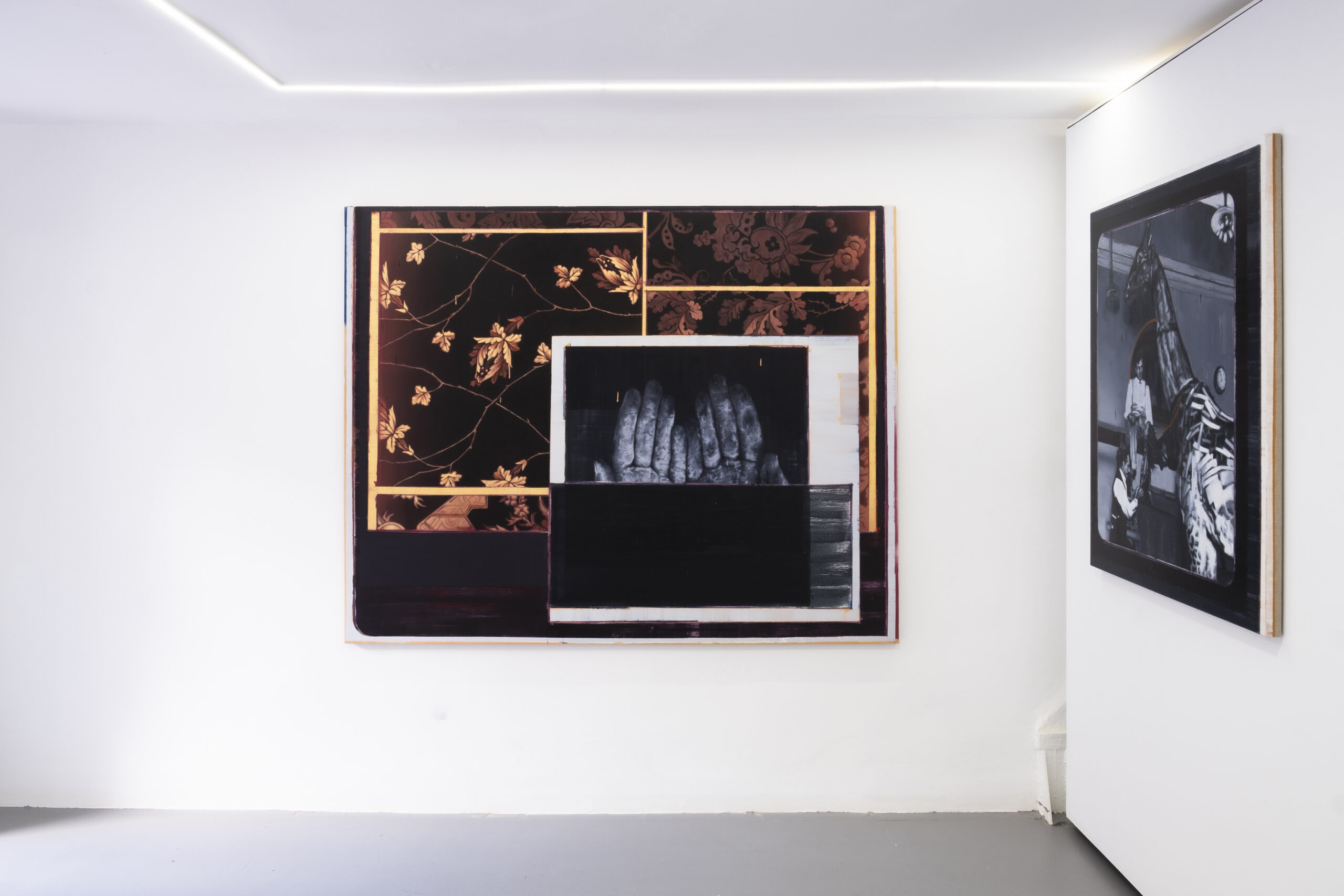
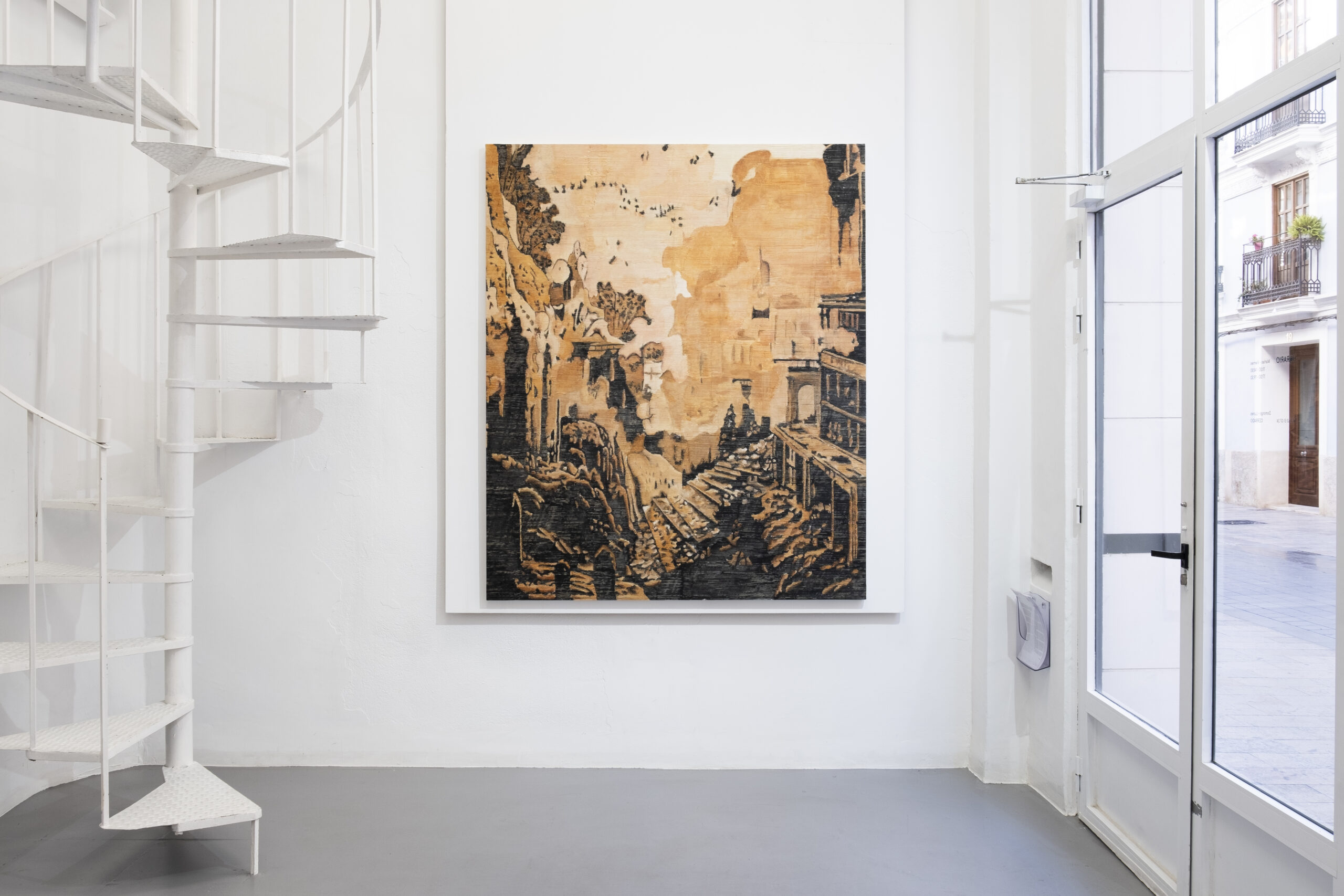
“Meditaciones sobre las distancias infinitas” is the new exhibition by Valencian artist Ana Císcar at Jorge López Gallery. “Meditaciones sobre las distancias infinitas” is the new exhibition by Valencian artist Ana Císcar at Jorge López Gallery.
The artist's work explores the value of the image and its narrative potential. In her pieces, she delves into the tension that arises from attributing to documentary photography the quality of faithfully representing reality, contrasting it with the interpretive, constructed narrative character attributed to the arts, and particularly to painting. Císcar specializes in the field of Contemporary Thought and Visual Culture.
Ana begins by appropriating old photographs, from archives and newspapers, which she translates into visual language through a complex process of image montage, based on blurring, recomposing, and juxtaposing the originals. This unique deconstructive strategy allows her to rethink and reactivate the material used, turning certain imaginaries on their head and questioning the politics of visuality. The result is hybrid paintings that, while they may retain the appearance of a document of reality, possess a tone of unsettling strangeness.
Javier Moral Martín, autor del texto de sala interpreta: Javier Moral Martín, author of the exhibition text, interprets: “There are ways to survive a world replaced by its image. We can deny its representations and try to look at the world directly, but we can also take the opposite path: recovering the world through the exhaustion of images. Of the two options, Ana chooses the second… she collects, looks and explores, digs, gathers and piles up, amasses images—but also images of images. She then puts them in succession and confronts them, cuts them, folds and tears them, interweaves them, subjects them to the alchemy of montage and chance, disconnects them from their immediate meaning until they break, until they bend so that at the end of the process, in their translation to the pictorial format, they end up revealing a glimmer ”
Meditaciones sobre las distancias infinitas Read More »
04.03.2026 – 08.03.2026
Group Show
From an awareness of travel—of what we carry, lose, or transform along the way—a different way of inhabiting the world may emerge.
Every politics of identity is, in essence, a politics of narrative: who speaks, from where, and in what language. The migrant artist—precarious, displaced, decentered—is no longer an exception, but a structural figure within contemporary art; a witness to shifting borders, invisible archives, and unmapped geographies.
What we once called “form” now reveals itself as surface, a taut skin upon which fragments of history are inscribed. Matter—light, paper, color, image—is never neutral; it speaks through contact, friction, and touch. In this return to the material and the sensorial, a different aesthetic experience emerges: more embodied, slower, uncertain.
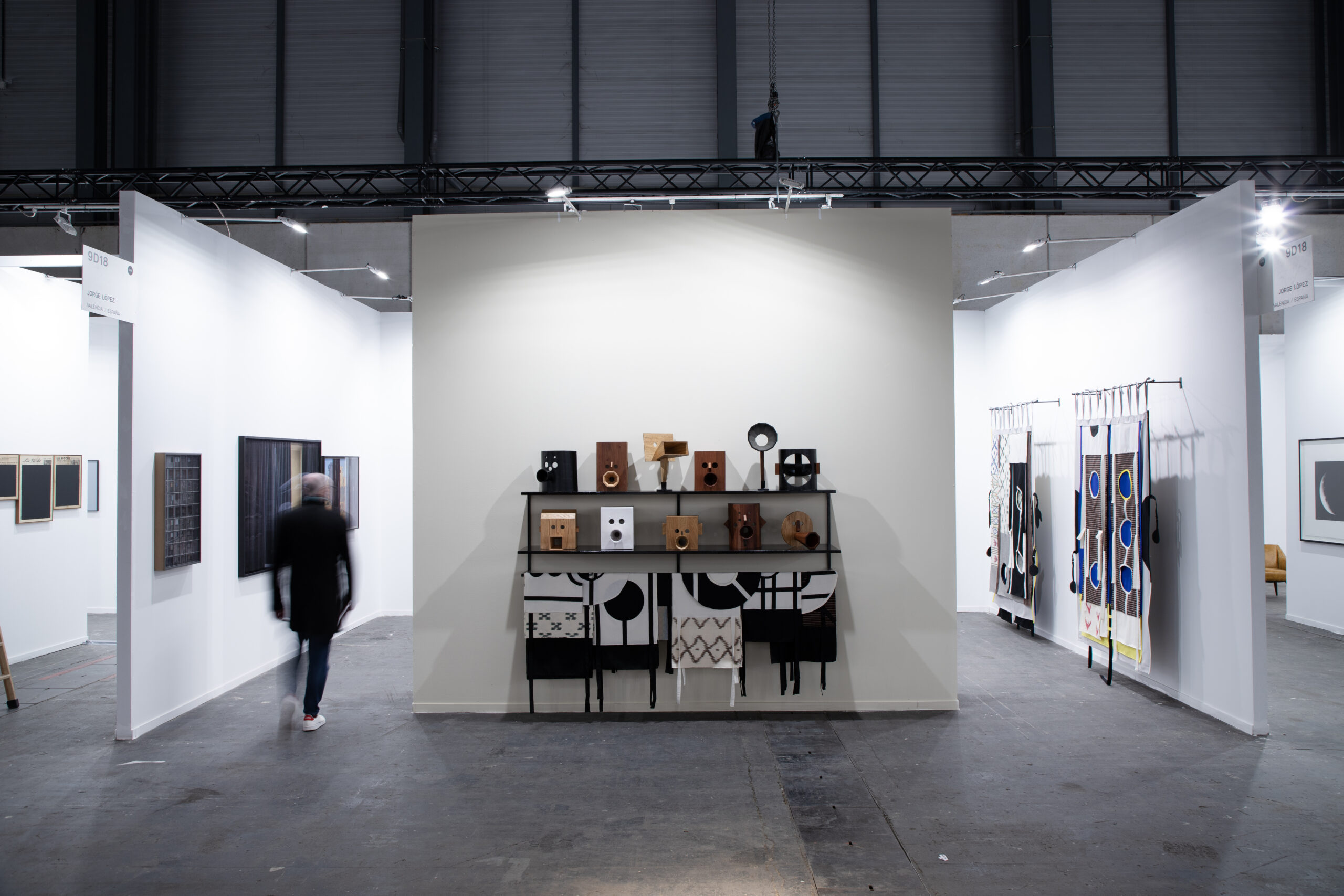
The artists presented by Jorge López Galería at ARCO 2026 constitute an unofficial archive, an affective palimpsest that engages peripheral memories, personal narratives, traces, and forms of care rendered invisible or neutralized by history books. They practice a poetics of care—at once a form of resistance—and understand travel not as tourism, but as a displacement of meaning, as critical wandering. In a context where thought dissolves into data and fragile connections, the space of art must render the residual legible, thereby linking history and the present, the intimate and the geopolitical, the global and the vernacular. The gallery thus becomes a narrative space in tension, where the imagined dialogues with the lost, and the image ceases to illustrate in order to pierce.
The artists: Valeria Maculan (Argentina), Álvaro Porras Soriano (Ciudad Real), Miguel Rothschild (Argentina), Inma Femenía (Pego) y Ana Císcar (Valencia)
Notes on an aesthetics of displacement Read More »
21.01.2026 – 25.01.2026
Group Show
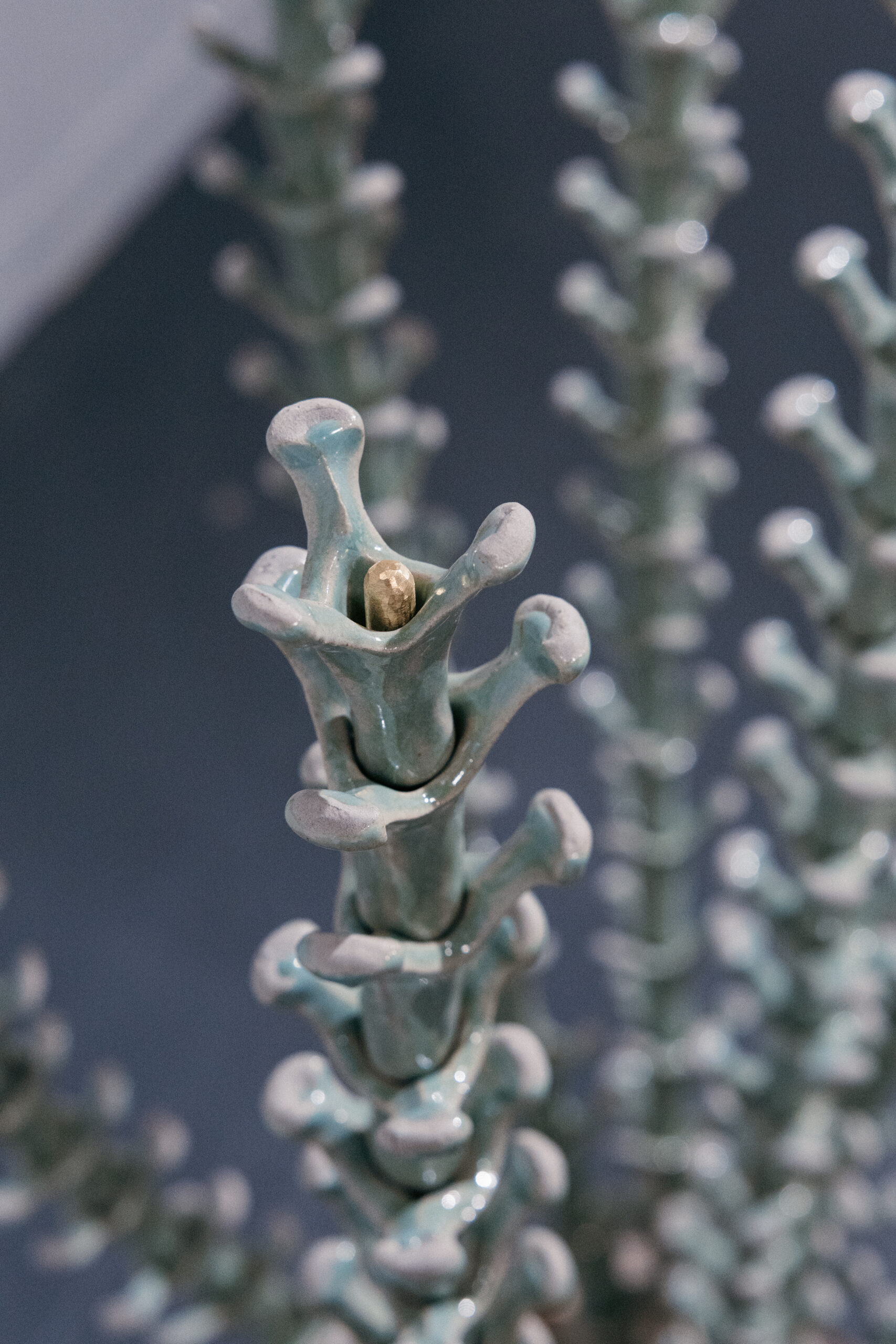
The collaboration between Ponce + Robles Gallery and Jorge López Gallery unfolds as a shared territory from which to reflect on the notion of inhabiting—not as a fixed state, but as a process in constant displacement. The project proposes an understanding of home as an unstable construction, shaped by travel, distance, and memory, where the body—nomadic, vulnerable, attentive—becomes the first form of architecture. The works brought together explore movement as a formative experience: that which is carried, lost, or transformed along the way. Within this continuous displacement, space ceases to function as a mere container and instead becomes an active interlocutor. The artists engage in dialogue with the spaces they inhabit, marking their own trajectories—paths inscribed both in physical territory and in the imagination—tracing affective and symbolic maps. Through ceramics as a shared practice—an ancestral medium linked to the earth, gesture, and time—Patricia Camet, María García Ibáñez, Javier Bravo de Rueda, and Chuiqui García address ideas of ecology, spirituality, travel, and memory. Ceramics emerges here as a slow form of resistance to contemporary acceleration: a language that preserves the imprint of the body and the environment, and that activates a deep attentiveness to material and process. The project thus brings together two galleries and four artistic perspectives that understand inhabiting as a relational practice—with the land, with history, with the spiritual, and with others. Rather than offering closed answers, the works pose open questions about how we construct meaning through displacement, and how matter itself can become a living archive of our trajectories. In this fragile yet persistent in-between space, an aesthetic of travel takes shape, proposing new ways of being in the world.
Las obras reunidas exploran el tránsito como experiencia formativa: aquello que se arrastra, se pierde o se transforma en el trayecto. En este desplazamiento continuo, el espacio deja de ser un mero contenedor para convertirse en interlocutor activo. Los artistas dialogan con los lugares que ocupan, señalando recorridos propios que se inscriben tanto en el territorio físico como en el imaginario, trazando mapas afectivos y simbólicos.
Desde la cerámica como práctica común —material ancestral, vinculada a la tierra, al gesto y al tiempo—, Patricia Camet, María García Ibáñez, Javier Bravo de Rueda y Chuiqui García abordan cuestiones relacionadas con la ecología, la espiritualidad, el viaje y la memoria. La cerámica aparece aquí como un medio de resistencia lenta frente a la aceleración contemporánea, un lenguaje que conserva la huella del cuerpo y del entorno, y que activa una escucha profunda del material y de sus procesos.
El proyecto conjuga así dos galerías y cuatro miradas artísticas que entienden el habitar como una práctica relacional: con la tierra, con la historia, con lo espiritual y con los otros. Más que ofrecer respuestas cerradas, las obras plantean preguntas abiertas sobre cómo construimos sentido en el desplazamiento y de qué manera la materia puede convertirse en archivo vivo de nuestras trayectorias. En ese entre-lugar, frágil y persistente, se configura una estética del viaje que propone nuevas formas de estar en el mundo.
Ceramiscs Brussels 2026 Read More »
27.11.2025 – 24.01.2026
Keke Vilabelda & Federico Miró
Keke Vilabelda's work focuses on the processes of construction and transformation of the natural landscape and contemporary urban space. Through painting he investigates our changing relationship with the environment and new ways of observing it. His works are built through the interaction of multiple techniques and a wide range of materials, such as cement or methacrylate, as well as photographic and digital media, generating his own but very diverse language.
Federico Miró's work represents natural landscapes through a technique that evokes textile art, suggesting the texture of intertwined fabrics and patterns that belong to another era. These elements invite you to reflect on the time involved in creating your pieces.
Mónica Maneiro, in charge of the exhibition text, points out "In Keke Vilabelda's paintings the matter moves by mechanical action, it opens by pressure generating landscapes that emerge from the works themselves. The idea of accident as power, of error as creative force, appears to value the unpredictable. In Federico Miró's painting the failure is implicit in the very scaffolding of the motif, nothing works, the planes of representation coexist, as in a drift of memory that tries to stitch together the collage of our vision. of the world.” Keke Vilabelda la materia se desplaza por acción mecánica, se abre por presión generando paisajes que surgen de las propias obras. La idea del accidente como potencia, del error como fuerza creadora, aparece para poner en valor lo impredecible. En la pintura de Federico Miró el fallo está implícito en el propio andamiaje del motivo, nada funciona, los planos de representación coexisten, como en una deriva de memoria que intenta coser el collage de nuestra visión del mundo”.
Vilabelda graduated from the UPV in 2009. Master in Arts from Central Saint Martins London in 2011. He has individual exhibitions in Spain, the United Kingdom, Belgium, Peru, Poland, Colombia, Mexico, Portugal and Australia. In addition, he has participated in important fairs and group exhibitions in China, Germany, the United States, Italy, France, Portugal and Switzerland. He has received numerous awards and scholarships from institutions, including: SMTCHI New Sensations, BMW Ibérica, The Royal Academy of San Carlos, the Valencia City Council and the Government of Spain. He has carried out residencies at Casa Wabi Oaxaca, Casa Velázquez in Madrid ZonaSeis México and Fundación Miró Mallorca.
Regarding Federico Miró's training, he obtained his bachelor's degree in Fine Arts at the University of Malaga in 2013 and completed the Master of Research in Art and Creation at the Complutense University of Madrid in 2014. Some of his most notable achievements include the Casa Velázquez Scholarship in 2025, the first Manuel Ángeles Ortiz painting prize from the University of Jaén in 2020, the BMW painting prize for innovation in 2017 and first prize at the “Salón de Verano” exhibition at the Moncloa room in Madrid in 2014.
The Madrid galleries F2 and Ponce + Robles participate in this exhibition.
PAISAJES DEL DESPLAZAMIENTO Read More »
02.10.2025 – 05.10.2025
Marta Valledor
In a gesture of geographical complicity and shared sensitivity, two galleries—ATM and Jorge López—one rooted in the North Atlantic of Gijón and the other focused on the Mediterranean light of Valencia, have decided to weave a joint dialogue to foster a proposal that transitions between the intimate and the expansive, presenting a young artist at the SWAB fair in Barcelona.
The choice of Marta Valledor (Santander, 1995) as the centerpiece of this collaboration is not a coincidence, but rather a clear desire to support an emerging voice whose work has already begun to subtly alter the landscape of contemporary Spanish art.
Valledor, recently incorporated into the collection of the Museum of Modern Art of Santander and honored at SWAB 2025 with the Kells Collection Prize, yet to reach her full potential, stands out as a promising artist to watch among the younger generations of Spanish artists.
26.09.2025 – 21.11.2025
The artistic practice of Miguel Rothschild (Buenos Aires, 1963) delves into the tensions between the sacred and the profane, the sublime and the fragile, the devotional and the ironic. From Berlin, where he has lived for three decades, he has developed a language in which everyday materials—shattered glass, nylon, pins, fishing lines, confetti, crystal diamonds—are transformed into vehicles of the numinous, into visual paradoxes that destabilize perception and complicate the aesthetic experience.
As Walter Benjamin recalled, "There is no document of culture that is not at the same time a document of barbarism." He also warned that, upon leaving the churches and entering museums, religious images lost their liturgical function but retained their cultural value. It is at this threshold that Rothschild stands: he does not seek to restore the lost faith, but rather to activate a visual memory laden with displaced symbols, with remnants, with a retreating aura.
The exhibition "Happy Are Those Who Believe Without Having Seen" deploys this tension in a group of works that reactivate the symbolic power of the sacred through material, visual, and poetic strategies. In Lo Numinoso, the transparency and vibration of fishing lines stretched over photographic paper condense the search for the invisible, the intuition of a presence that cannot be shown but only insinuated. This same fragility appears in Absolution, where photographs of confessionals transformed into precision games with steel balls transform the rite of repentance into chance and repetition. The violence of the image paradoxically opens a horizon of redemption: the wound becomes a path to liberation.
Excerpt from the text by Iñaki Martínez Antelo Iñaki Martínez Antelo
felices los que creen sin haber visto Read More »
23.10.2024 – 27.10.2024
The Madrid-based José de la Mano gallery and the Valencia-based Jorge López gallery travel to Turkey to participate in the fair: Contemporary Istanbul 2024.
The exhibition project for IC (Istanbul Contemporary 2024) brings together two prominent artists of Turkish and Armenian origin whose lives and works reflect the complex dynamics of migration and interculturality, exploring the revaluation of identities and shared origins. Joseph Terdjman (1924-2001), born in Armenia and emigrated to Paris, where he developed his work and artistic practice, and Volkan Diyaroglu, born in 1982 in Istanbul and living in Berlin.
Contemporary Istanbul | Origen e identidades Read More »
13.06.2025 – 18.09.2025
In keeping with the Palán-Palán spirit, the Jorge López gallery opens its doors to various "invasions," unexpected appearances of other people's works: in some cases the guests are friends, in others, admired artists, and in still others, the choice is almost random. In any case, the encounter enriches both parties and clarifies their mutual intentions: Alberto sets himself the challenge of seeing himself through the other, unraveling in brief texts the bond that unites him to those who cohabit his space.
As the boundary between self and other blurs, the notions of authorship and ownership also become more complex: the interchangeable relationship between everyone and the mutual redefinition of the exhibition and, more generally, the system, even in terms of symbolic value.
Excerpt from a text by Benedetta Casini, Independent Curator.
05.06.2025 – 08.06.2025
Group Show
This project was created for the CerARTmic 2025 fair, bringing together three outstanding artists: Javier Bravo de Rueda, Eduardo Barco, and Pablo Bellot. It unfolds like an impossible catalogue, an archaeology of situations that never existed, yet inhabit each ceramic work.
Here, ceramic is treated as a living form, one that remembers, that breathes, that screams, that writes and that dreams.
The project begins with an intuition: ceramics are not just fired earth; they are a voice hardened by flame, a bowl, an urn, a brick.
Each piece holds an echo in three states: fire, scream, and code.
Ceramic here is more than a mere object.
It is witness.
It is voice.
It is archive.